
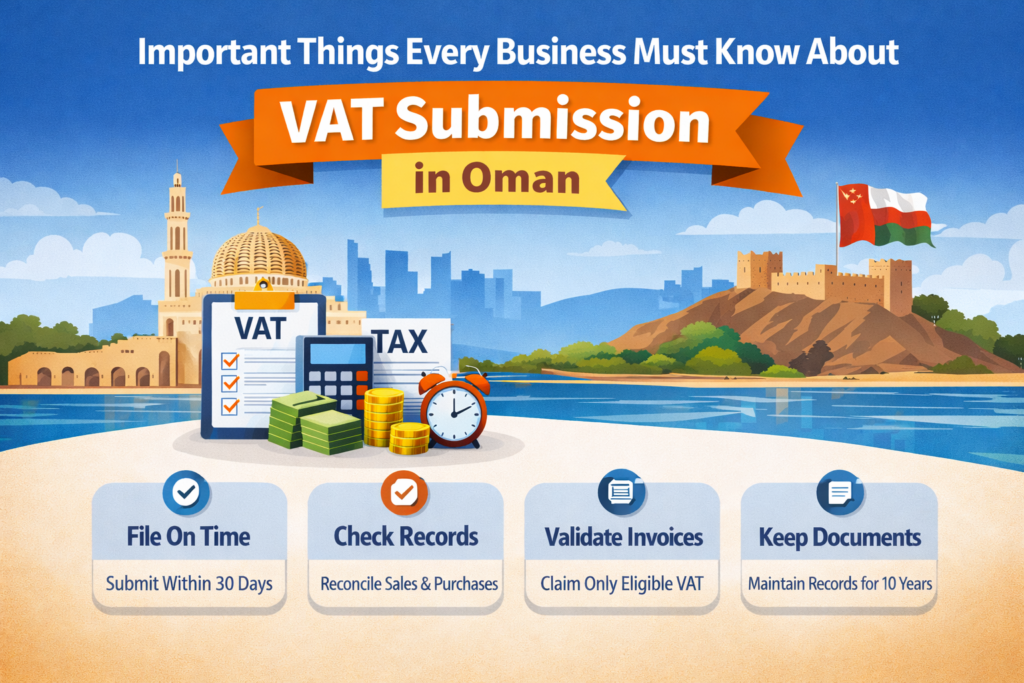
Since the introduction of VAT in Oman in April 2021, businesses are required not only to calculate VAT correctly but also to submit their VAT returns accurately and on time. Many penalties and compliance issues arise not from calculation errors, but from mistakes during VAT submission.
If you are a business owner, accountant, or finance manager, here are the most important things you must know about VAT submission in Oman.
1. Understand Your VAT Filing Period
Not all businesses file VAT returns at the same frequency.
- Most small and medium enterprises (SMEs) file quarterly
- Large businesses may be required to file monthly
Your assigned tax period is available in the VAT portal. Always confirm your filing cycle to avoid missing deadlines.
2. Know the VAT Return Deadline
VAT returns must be submitted within:
30 days after the end of the tax period
For example:
- If your VAT quarter ends on 31 March
- Your submission deadline will be 30 April
Late filing can result in administrative penalties and fines.
3. Reconcile Your Sales Before Submission
Before filing your VAT return, make sure:
- Total sales match your accounting records
- Standard-rated (5%) supplies are correctly calculated
- Zero-rated supplies are properly disclosed
- Exempt supplies are separated correctly
Misclassification of supplies is one of the most common VAT compliance mistakes in Oman.
4. Verify Input VAT Eligibility
You can only claim input VAT if:
- You have a valid tax invoice
- The supplier is VAT registered
- The expense is related to taxable business activities
VAT on personal expenses or blocked items cannot be claimed. Incorrect claims may trigger penalties during a tax audit.
5. Check Reverse Charge Transactions
If your business imports services or goods from outside Oman, reverse charge VAT may apply.
Many businesses forget to declare reverse charge VAT, which can create compliance risks. Always review foreign supplier transactions before submission.
6. Ensure Proper Reconciliation
Before clicking “Submit” in the VAT portal, reconcile:
- VAT return totals
- Trial balance
- Sales register
- Purchase register
Proper reconciliation reduces errors and prevents future tax disputes.
7. Make VAT Payment on Time
If your VAT return shows a payable amount:
- Payment must be made before or on the due date
- Late payment may result in penalties and interest charges
Even if you submit the return on time, late payment can still attract fines.
8. Maintain Proper Documentation
Oman VAT law requires businesses to maintain records for at least 10 years, including:
- Sales invoices
- Purchase invoices
- Credit and debit notes
- Import/export documents
- Filed VAT returns
Proper documentation is essential in case of a tax audit.
9. Avoid Common VAT Submission Mistakes
Some frequent errors include:
- Late submission of VAT return
- Claiming input VAT without valid documentation
- Applying incorrect VAT rates
- Failing to report adjustments
- Ignoring reverse charge transactions
Being proactive helps avoid unnecessary penalties.
10. Review Carefully Before Final Submission
Once submitted, correcting errors can be complicated and may require formal amendments.
Always:
- Double-check figures
- Confirm VAT payable amount
- Review classifications
- Ensure payment arrangement is ready
Taking a few extra minutes for review can save significant time and money later.
Conclusion
VAT submission in Oman is more than just filling numbers in the portal. It requires proper reconciliation, documentation, classification, and timely payment.
By understanding these important points, businesses can:
✔ Stay compliant with Oman Tax Authority
✔ Avoid penalties and interest
✔ Improve financial accuracy
✔ Prepare confidently for audits
A structured VAT review process before each submission is the key to stress-free compliance.